Native American Adobe Homes
Native American adobe homes are the earthen dwellings of the Southwestern Pueblo peoples.
They are among the oldest continuously occupied buildings in what is now the United States. The tradition predates European contact by centuries.
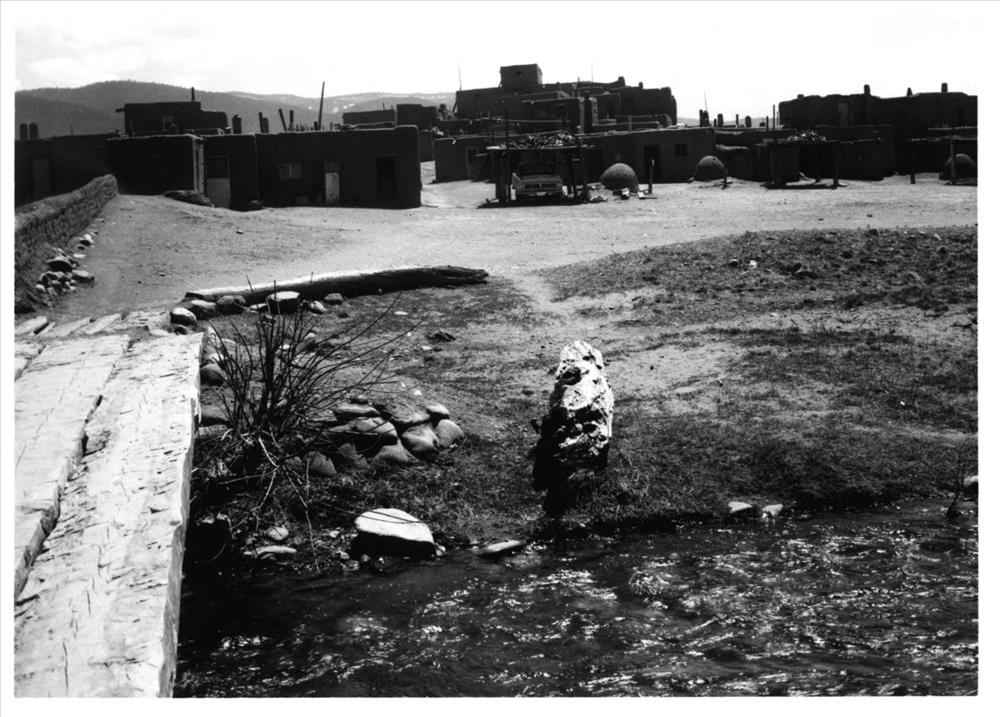
Puddled earth came before the brick
Before the Spanish arrived, Puebloan builders worked in coursed or puddled earth.
Wet mud was laid up in lifts, each allowed to stiffen before the next went on. That produces a monolithic wall with no joints.
The technique needs no moulds and no tools beyond hands and water.
The wooden brick mould came with Spanish colonisation in the sixteenth century. Later walls show visible courses where earlier ones do not.
How the buildings are organised
Pueblo construction stacks.
Rooms accumulate sideways and upward around plazas. Upper storeys step back, and the roof of one unit becomes the terrace of the next.
Access was historically by ladder rather than ground level doorway, which mattered defensively.
- Flat roofs carried on peeled timber beams called vigas
- Smaller latillas laid across the vigas, then packed earth on top
- Canales, projecting spouts that throw water clear of the wall base
- Annual replastering as ordinary maintenance, not restoration
Continuity, not preservation
The distinction that matters is between inhabited communities and archaeological sites.
Taos Pueblo is a living community with an unbroken record of occupation. Its buildings are maintained by the people who live in them.
At Acoma the mission church of San Esteban del Rey, completed in 1629, sits inside the mesa top village. It shows both traditions in one complex.
Where the two traditions meet
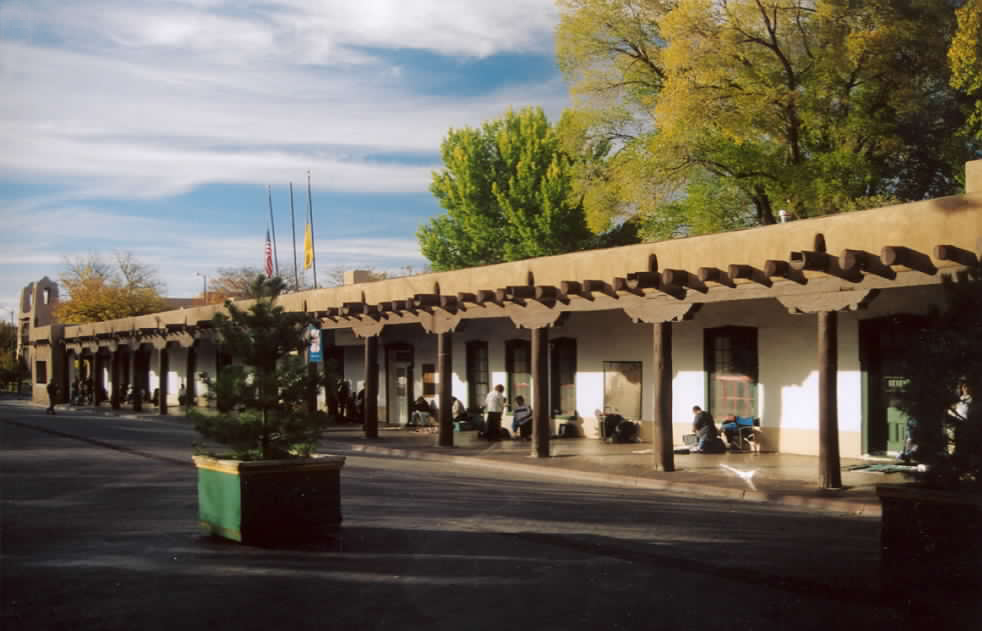
The Palace of the Governors in Santa Fe was begun in 1610.
It was built with Puebloan labour and Puebloan technique under Spanish direction. Its walls are the same material as the pueblos and its plan is European.
Most surviving Southwestern adobe is some negotiation between the two.
Documented examples in the catalogue
- Taos Pueblo , Taos, NM
- San Esteban del Rey Mission , Acoma, NM
- Palace of the Governors , Santa Fe, NM
Common questions
What are Native American adobe homes called?
In the Southwest they are generally called pueblos, from the Spanish word for town. The term covers both the multi storey village structures and the individual dwellings within them.
Are Native American adobe homes still lived in?
Yes. Taos Pueblo in New Mexico remains an inhabited community, which makes it one of the longest continuously occupied settlements in North America rather than a preserved ruin.
Did Puebloan builders use adobe bricks or poured earth?
Both. Puddled or coursed earth, where wet mud is laid up in lifts and allowed to stiffen, predates the moulded brick. The Spanish introduced the wooden brick mould in the sixteenth century.