What Are Adobe Houses?
What are adobe houses? Houses whose load bearing walls are built from sun dried earth brick.
The material is the definition. Style, roof form, and region all follow from it.
The material test
A house is adobe when the walls carry their load in earth.
The blocks dry in open air. Firing them would make burnt brick, a different material.
This matters because adobe is often plastered. Mud, lime, and modern cement stucco all hide the block underneath.
The mix is four things:
- Clay, which binds the mix
- Sand, which controls shrinkage
- Water, which makes it workable
- Straw, which limits cracking as the block dries
How to recognise one
Wall thickness gives it away.
Adobe walls run around two feet thick. Openings sit in deep reveals.
A frame wall is a fraction of that. Stand at a window and look at how far back the glass sits.
- Flat or low parapet roofs draining through projecting canales
- Peeled timber beams, called vigas, spanning short distances
- Few and small openings, because each one interrupts a load bearing wall
- Rounded wall edges and slightly irregular plan lines
- A visible plaster repair history, often patched in separate campaigns
Where adobe houses survive
This catalogue documents 214 adobe properties across ten states.
New Mexico holds 58 and California 106, with smaller inventories in Arizona, Colorado, Nevada, Texas, Kansas, Utah, Florida, and the District of Columbia.
Survival tracks climate and roof maintenance rather than age.
Adobe lasts indefinitely while it stays dry and water is thrown clear of the wall base. Once a roof fails, a wall can return to soil in a few seasons.
Documented examples in the catalogue
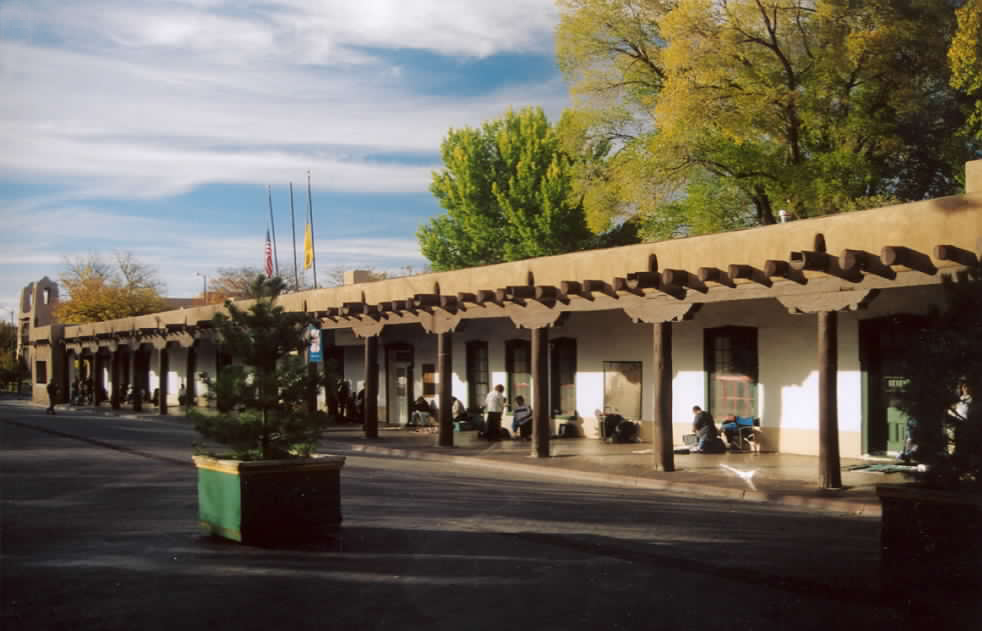
- Palace of the Governors , Santa Fe, NM
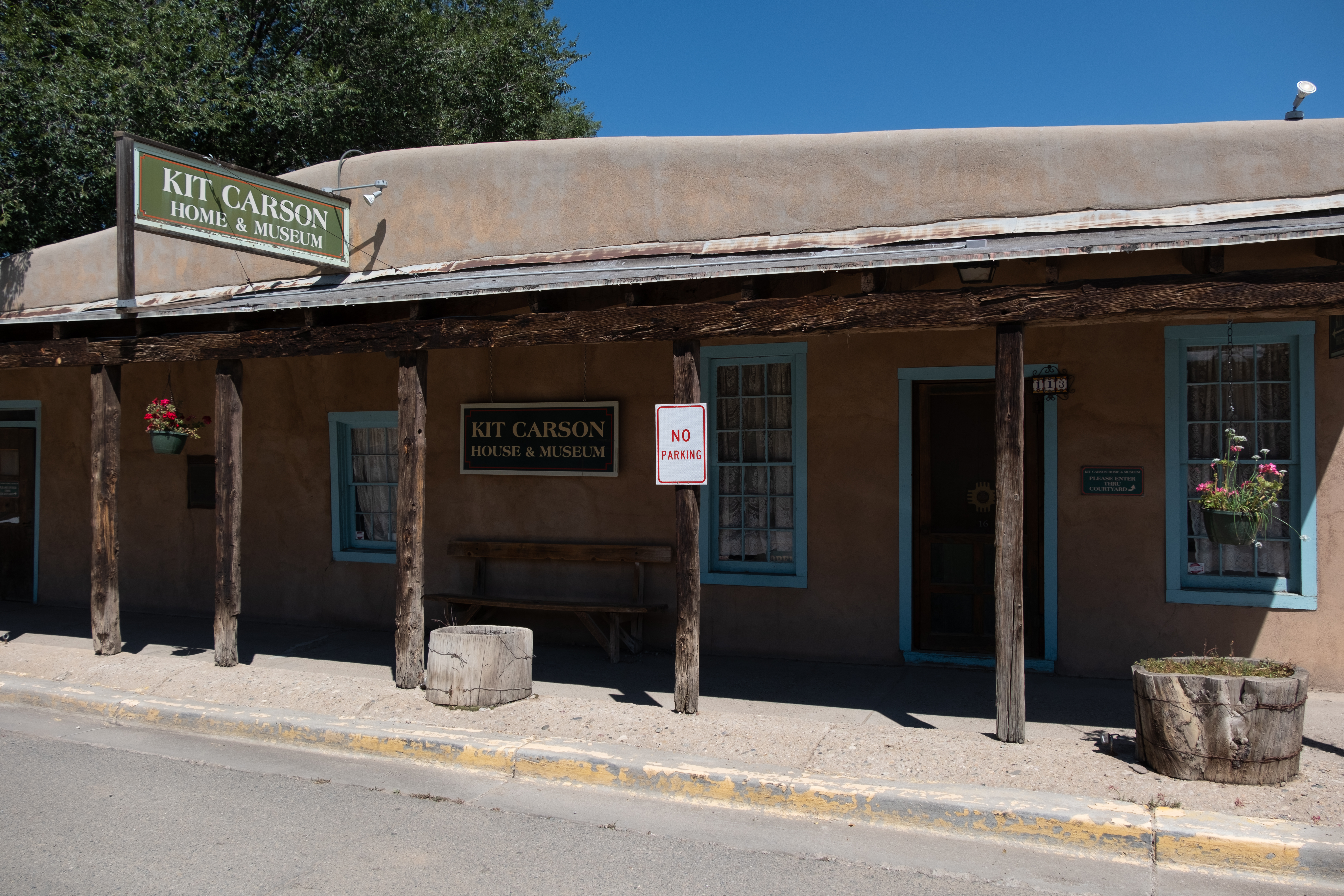
- Kit Carson House , Taos, NM
- Leonis Adobe , Calabasas, CA
Common questions
What are adobe houses made of?
Clay, sand, water, and usually a straw binder, formed into blocks and dried in the sun. The soil is normally dug at or near the building site, which is why colour varies by region.
How can you tell if a house is adobe?
Look at wall thickness at the window reveals. Adobe walls are commonly two feet thick, and stucco can hide the material but not the depth of the reveal.
Are adobe houses the same as pueblo houses?
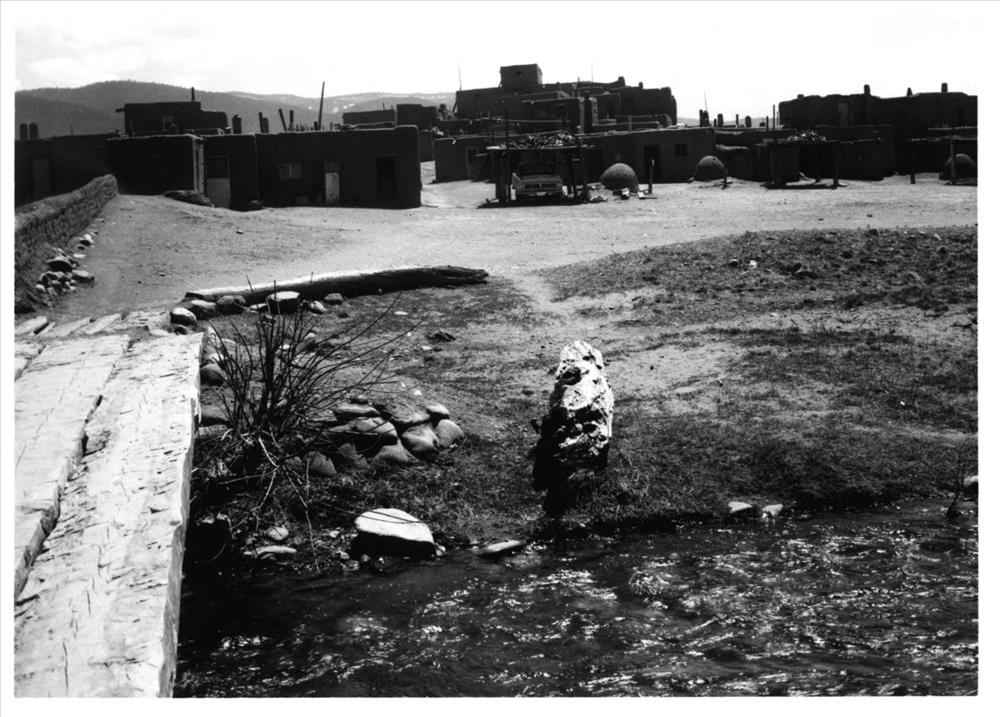
Not quite. Adobe is the material, while Pueblo is a building tradition and settlement form that uses it, which is why plenty of adobe houses are not Pueblo in style.